Wednesday, February 1, 2012

Seasons

VOCABULARY WORDS:

Seasons-موسم 
The four seasons of the Earth


Tilt- ٹلٹ 
Earth’s axis is tilted over about 23.5 degree which means its not straight.

Axis-محور 
An imaginary vertical line in the center of the Earth.
Revolution- انقلاب 
Earth’s movement around the Sun.

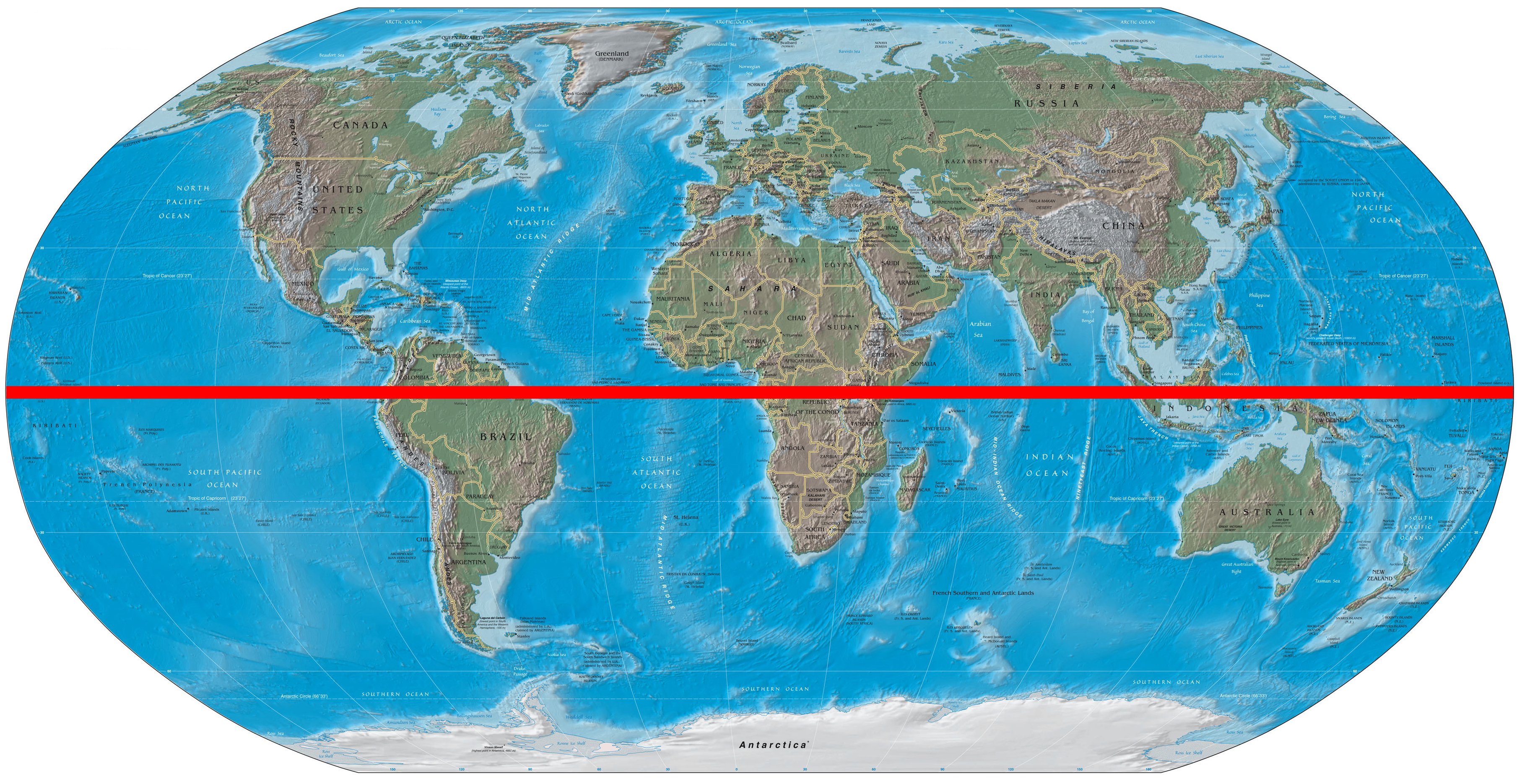
Equator- خط استوا
A horizontal line in the center of the Earth that divides Earth into North hemisphere and South hemisphere

Orbit- مدار
An object’s movement around another object in space

Ellipse- بیضوی
Oval shape

Polaris - ستارہ
A bright star located in North
       

Direct sunlight- براہ راست سورج کی روشنی
When the Sunlight hits the Earth straightly.

Indirect sunlight- بالواسطہ سورج کی روشنی
When the sunlight hits the Earth in an angle.

SUMMARY:

There are four seasons of the Earth known as winter, spring, summer and autumn. The Earth seasons are caused by Earth's axis which is tilted over about 23.5 degree. During the Earth's revolution the seasons occur. Earth orbits the Sun in an ellipse shape. Earth's axis is always pointing toward Polaris. Earth is divided by an imaginary line called equator. Winter occurs when there is indirect sunlight. Summer occurs when there is direct sunlight hitting the Earth. When there is spring in North hemisphere, autumn is in South hemisphere.

VIDEO:


CRITICAL THINKING QUESTION:

Question: How is Earth affected by movement (revolution)?

Earth is affected by its movement. Earth’s movement around the Sun causes four seasons known as winter, spring, summer and fall. It takes 365 days for Earth to complete its revolution around the Sun once. When the Earth rotates on its axis it causes day and night. The neap tide and spring tide are also caused by movement. Earth gets indirect and direct sunlight that’s how it gets different seasons.


REFLECTION:

1.     What did you enjoy most about this project and why?
I most enjoyed when I was drawing pictures and also I enjoyed when we were practicing of moving pictures and vocabulary words.

2.     What was most challenging for you during this project and why?
The most challenging part for me was when one of my group member was absent the whole week and we had to finish his work and our own work on time.

3.     What new skills did you learn from doing this project?
I learned that how the seasons occurs and that Earth’s movement affects a lot. I also learned many new vocabulary words.

4.     Is there anything that you could have done to improve any of your work? Explain.
      I think it would be a lot better if I had more group members.  Also I think I had to use more creativity.


Tuesday, December 13, 2011

Geologic Time - Paleogene period


Summary:

Paleogene period bagan 65 million years ago and lasted 24 million years ago. The Paleogene period is break down in three epochs: Paleocene epoch, Eocene epoch and Oligocene epoch. Each epoch has characterisitcs for climate, geography, plants and animals. The Himalayan mountains formed during the Paleogene period. This period is known as mammals period because mammals were dominant during this period.

Video:


Reflection:

What did you enjoy most about this project?
I enjoyed learning about the Paleogene period and that how the Himalayan mountains formed. The most intereting information was that the birds were larger than horses in size.

What was most challenging about this project? Why?
The most challenging part was to learn about the three epochs and their characteristics.

What you would change about this project and why?
I would change this project by learning about each era not just learning about one period.

What are 3 things that you learned from this project?
I learned about
  • Himalayan mountains formation
  • weather changing from hot to cold
  • birds were larger than the horses in size

Thursday, October 20, 2011

Planet Profile

PLANET:                                       


                                NEPTUNE


Diagram:
 
Planet Order: 8 from the Sun

Distance from the Sun: 4,498.3 million km

Mass: 17,151 kg                                           Diameter: 49,528 km

Rotation: 16 hours                         Revolution: 164.8 years

# of Moons: 13

Jovian

Planet Description:
         Uranus is Neptune's twin.Neptune was the first planet found.Discovered on September 23, 1846.Neptune was observed by Johann Galle. Its made out of gas. Neptune has been visited by only one spacecraft. 

Interesting Facts:
  • Farthest planet from the Sun in the Solar System.
  • Named for the Roman god of the sea.

Wednesday, October 19, 2011

Planet Profile

PLANET:                                                  MERCURY

Diagram:


Planet Order: 1 from the Sun

Distance From the Sun: 57.9 million km.

Mass:  3.30 x 10²³ kg                     Diameter: 4.879 km

Rotation: 59 days             Revolution: 88 days

# of Moons: 0

Mercury is a terrestrial planet.

Planet Description:
          
         Mercury is a dry, rocky planet. Its had no atmosphere. The temperatures range is 430 degrees Celsius to170 degrees Celsius. The surface of Mercury is covered with craters. Half of Mercury had never been seen. Ancient peoples have known about Mercury for thousands of years.

Interesting Facts:

1. Mercury is the closest planet to the Sun.
2. Mercury travels fastest around the Sun.

Friday, October 7, 2011

Hurricane Irene Project

Critical Thinking 

1. What effects does the water temperature have an the creation a hurricane?

The hurricanes form in warm water so if the water is warm hurricane can form.

2. Why would there be more damage to an area during high tide?

There will be more damage to an area during high tides because the flood water will be all over the place

and it can cause saturation.

3. If an area is fully saturated, how will this be more dangerous for an area?

Saturation can be caused by flooding. The plants will not grow up because there will be so much water.

The saturation cause slipping.


4. Why would there be more flooding if the ground was fully saturated?

The ground will be slipping because of the saturation and when the flood happens in rivers and the water

come out, water will go  far away and destroy everything that is in its way.


Reflection

1. What is something that you liked about this mini-project?

It gives a lot of information just in one short paragraph.

2. What was difficult for you on this project?

To understand the water cycle process and vocabulary words.

3. What would you change about your work on this project?

Next time I will add some images so people will understand it more easily.

4. How did this project help you learn about Hurricane Irene?

It helps me learn that how does hurricanes occur and what are there effects on our daily lives.